ME218A: Smart Product Design Fundamentals
ME218A is the first course in Stanford’s graduate level Mechatronics series. In this course, you learn about transistors, digital and analog circuits, operational amplifiers, comparators, software design, state machines, and C programming. You apply the knowledge though four labs and a team course project.
Labs
The MCU used for all the labs was TI’s Tiva Launchpad, an ARM Cortex M4F evaluation board.
Lab 1: Studied the switching behavior of a transistor and modeled the power loss while in the linear region.
Lab 2: Built an IR signal source and photo-transistor circuits and utilized a Schmitt trigger design.
Lab 3: Interfaced with an LCD display, wrote C code to manipulate I/O, and wrote abstracted interface routines.
Lab 4: Complete IR Morse code application that would decode a code into words and display them on a LCD.
Team Project
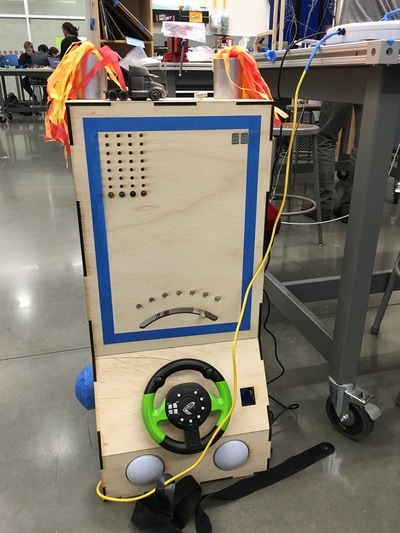
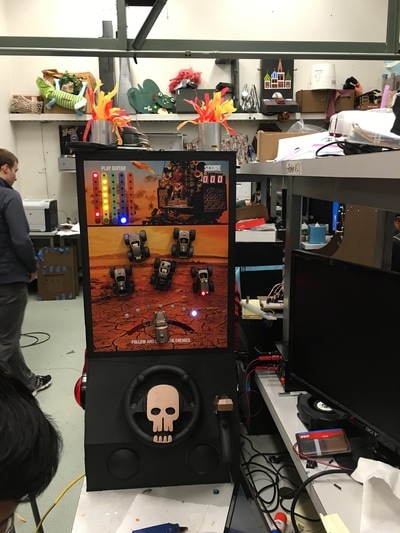
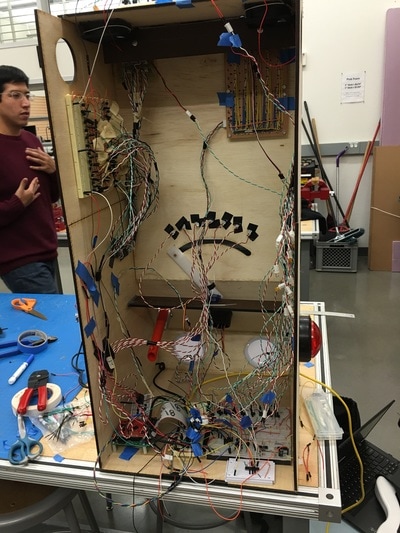
The team projects objective was to build an interactive arcade machine. The machine needed to have a water theme, require three types of inputs (one analog and one non-contact), have a large scale motion, creatively display time passage, incorporate both audio and haptic feedback, fit within an 18"x18"x36" footprint, and have a welcoming mode and celebration mode.
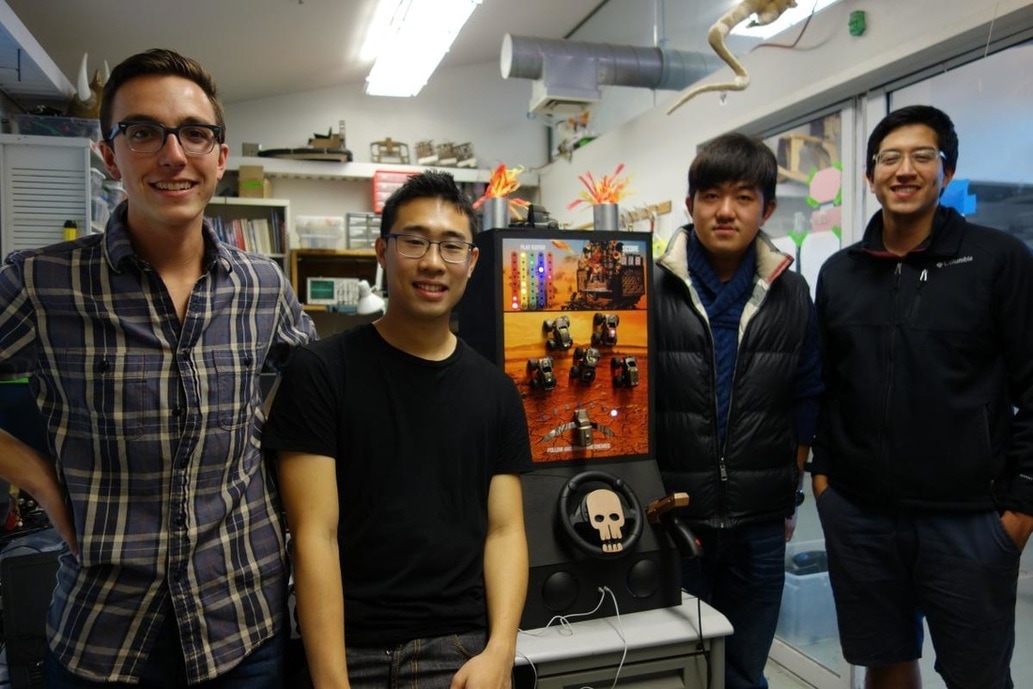
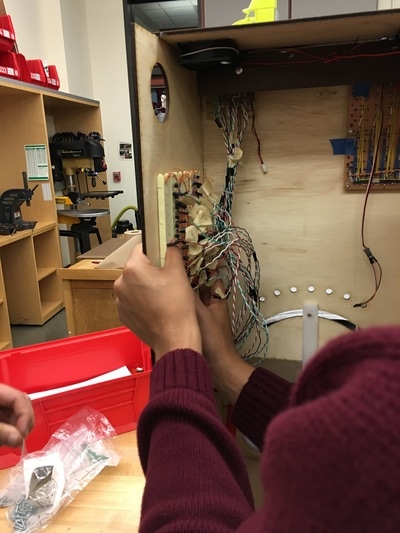
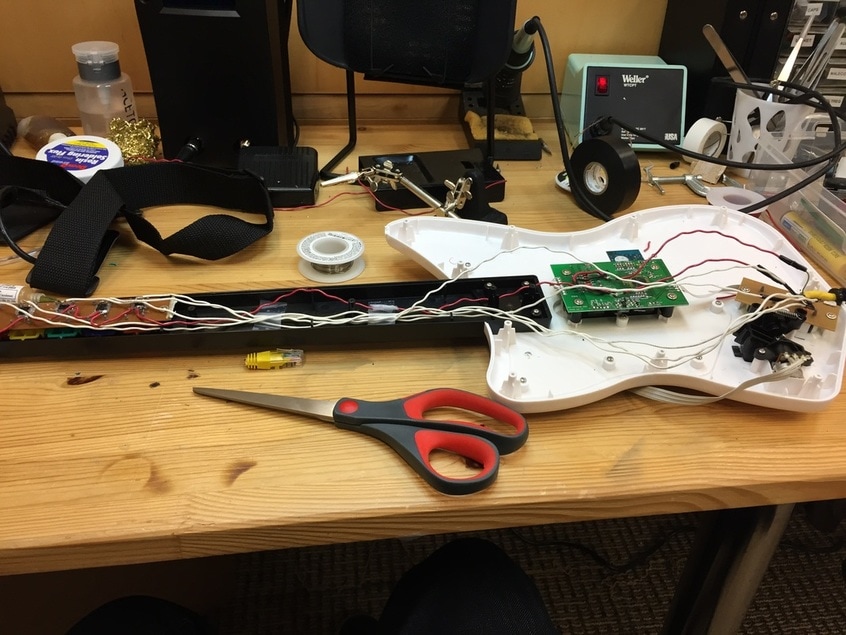
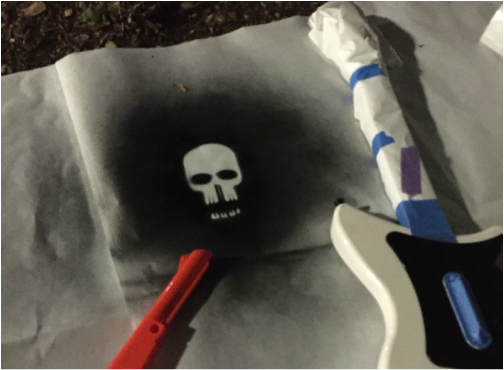
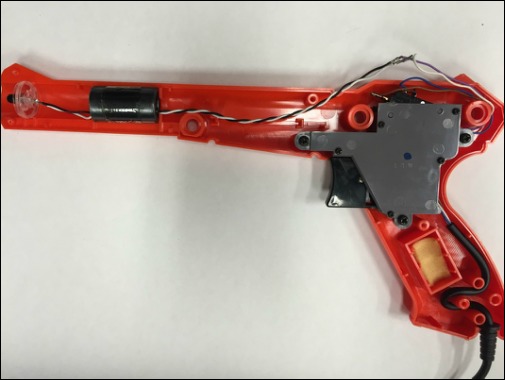
Our team came up with “Mad Max Aqua Road” a guitar hero/Mad Max/driving hybrid. My role was designing the state machine, initializing all hardware, reverse engineering the guitar, programming the LED marquee, and a lot of the UI and UX design.